
Healthcare Executives Weigh in on the Future of Allied Health Talent
Healthcare workforce challenges aren’t going away. Healthcare employers continue to face persistent shortages in critical allied health roles, while adapting to new technologies, changing workforce expectations, and growing demands for patient-centered care.
As the healthcare workforce enters a period of profound change that will require much more than simply expanding existing programs, Vocate Education Solutions is reimagining how we prepare learners for successful careers while strengthening the future healthcare workforce. By translating employer insight into educational strategy, we’re helping to build a more reliable pipeline of job-ready allied health talent and workforce solutions that help our partners recruit, retain, and grow the professionals they need for the future. Preparing learners for that future requires more than expanding existing programs. It requires listening directly to the healthcare employers who lead today's workforce.
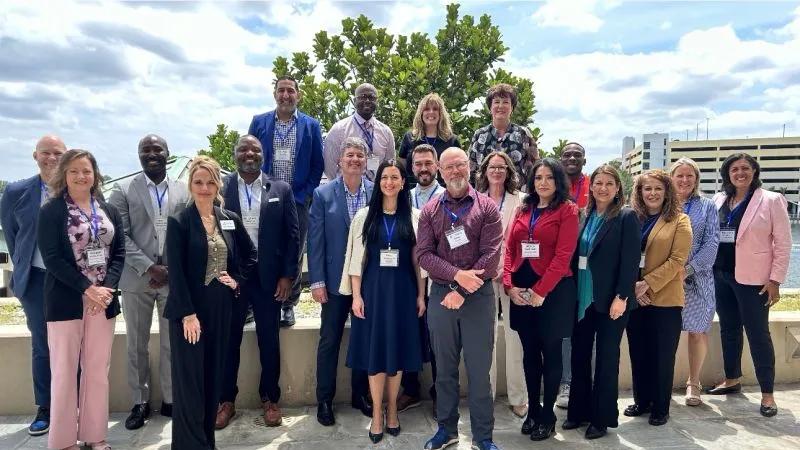
To that end, the Executive Healthcare Advisory Board (EHAB) was created. Rather than relying only on labor market data, EHAB connects healthcare employers with Vocate’s education leaders to identify emerging workforce development needs and inform future program development.
“We wanted to hear directly from executives,” says Bridget Hyde, Vice President of Compliance and Regulatory Affairs for Vocate. “What are they seeing? Where are they struggling? What skills are they looking for? Those conversations help us understand where we can be part of the solution.”
What Healthcare Leaders Are Seeing Now
At a recent annual EHAB meeting, board members weighed in on the current state of the industry and some of the key issues affecting their organizations.
One eye-opening finding was the challenges they are facing in filling key allied health positions. Many members indicated that radiologic technologists, surgical technologists, and sterile processing technicians are among the most difficult positions to fill.
The board’s observations mirror national workforce trends including:
- Vacancies in multiple imaging modalities are nearing all-time highs1
- A shrinking training pipeline and low pay are driving a shortage of surgical technologists, just as an aging population is driving an increase in surgical demand2
- Sterile processing roles remain under-resourced and difficult to fill3
These same roles are expected to experience some of the greatest demand over the next three years, signaling that workforce shortages are likely to continue rather than improve.
Workforce readiness is another issue identified by board members. Today’s healthcare organizations aren’t simply looking for more applicants. They are looking for graduates who can contribute from day one. When asked why new hires struggle on their first day, most frequently cited:
- Clinical readiness
- Professionalism and soft skills
- Technical skill gaps
- Speed and productivity
These findings shine a new light on the importance of listening carefully to what healthcare employers are saying. “Our traditional advisory boards focus on maintaining and improving existing programs,” Hyde says. “EHAB helps us look forward — to understand where healthcare organizations are headed and what they’ll need from tomorrow’s workforce.”
Turning EHAB Insights Into Action
Unlike traditional academic advisory boards that focus primarily on reviewing existing programs, EHAB was designed to translate employer feedback into educational action — to help inform curriculum, guide workforce training initiatives, and shape future program development, so graduates are better prepared for the realities of today’s healthcare workplace.
EHAB members represent a wide range of healthcare leadership roles, from talent acquisition and workforce development to clinical operations. They provide insight into hiring trends, retention challenges, career pathways, and changing skill requirements. Their in-depth conversations help inform Vocate’s research and development efforts and help influence decisions about where to invest in new healthcare education opportunities.
Recent discussions have helped shape planning around programs in areas including radiography, imaging, sterile processing, and paramedicine, fields where employers continue to report significant workforce demand.
As a brand within Vocate, Nasium Training has benefited from these discussions, recently expanding its portfolio of healthcare training and certification programs to address areas of critical need. These offerings help employers strengthen their talent pipelines while addressing the evolving needs identified by healthcare decision-makers.
Among the advisory board members contributing to these critical discussions are healthcare leaders like Paul Nanda, MD, chief medical officer of TGH Urgent care, a network of medical clinics in the Tampa Bay area. Dr. Nanda has shared strategies for helping healthcare organizations retain employees through career advancement and upskilling opportunities.
In addition, Joel Horsford, founder and CEO of Rad Employ, a jobs marketplace designed to connect medical imaging professionals with hospitals and imaging centers, has provided valuable perspective on the growing demand for imaging professionals and the competencies healthcare employers expect from new graduates.
These conversations and many others have helped guide Vocate in making decisions about future programs and workforce training initiatives.
Preparing Graduates for More than Technical Success
One message has emerged consistently throughout both the recent survey and advisory board discussions: Technical skills alone are no longer enough to meet the growing demands of healthcare employers who expect graduates to arrive with professional behaviors, communications skills, and critical thinking abilities.
Among the recent responses to the survey of EHAB members were indications that professionalism, clinical readiness, and productivity are some of the common gaps affecting new employees. Those findings reinforce Vocate’s commitment to preparing learners not only for their certification exams, but also for the realities of working on healthcare teams.
“We hear repeatedly that healthcare professionals need to think on their feet,” Hyde said. “They're working in high-pressure situations where communication, confidence, and critical thinking matter just as much as technical knowledge.”
Ultimate Medical Academy (UMA), another healthcare education brand within Vocate, recognizes that career preparation must extend beyond technical knowledge. Starting at 15 weeks before graduation, UMA learners gain access to Career Pathways, a self-service platform offering training modules and tools focused on interviewing, typing, workplace technology, professional skills and more. Together, these resources help learners build the technical capabilities and professional readiness needed to prepare for job placement.
Preparing for an AI-Enabled Healthcare Workforce
Artificial intelligence (AI) also surfaced as an important discussion topic during the advisory board meeting.
Survey participants acknowledged that there is great uncertainty about AI. They also stressed the importance of interpersonal skills and customer service even as technology becomes more integrated into healthcare delivery. Instead of expecting graduates to become AI experts, many employers want them to understand how AI is being used, recognize its limitations, and know when to rely on clinical judgment. The goal isn’t to replace clinical judgment, but rather to prepare graduates to work confidently alongside emerging technologies.
“The expectation isn't that graduates become AI experts,” Hyde said. “It's that they understand where AI is being used, recognize that it's not always perfect, and know when to rely on their own training and critical thinking.”
From Conversation to Action
Perhaps the greatest value of EHAB is that employer feedback doesn't end when the meeting concludes. Insights that are gathered as a result of board discussions are shared with Vocate research and development, academic, and compliance teams to help shape development and workforce training initiatives across the organization.
The result is an ongoing feedback loop between healthcare employers and educators — one designed to ensure healthcare education programs continue evolving alongside the workforce they serve.
Healthcare will continue to evolve. By maintaining an ongoing dialogue with employers Vocate can anticipate changing workforce needs instead of simply reacting to them.
“The people hiring healthcare professionals understand workforce challenges better than anyone,” Hyde said. “Bringing those voices together helps us make better decisions about where to invest and how we prepare learners for successful careers.”
2 Becker’s Hospital Review. The surgical technologist shortage, explained.
3 Surgical Directions. Urgent sterile processing workforce challenges impacting surgical safety.